Choose Suitable Plants: Select plants that are suitable for your...
Read More10 Tips for Foliar Feeding with Solu Water Soluble Fertilizers
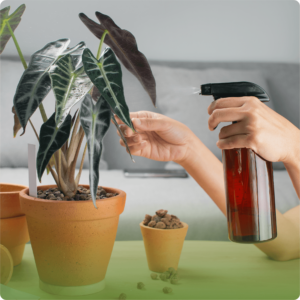
One of the main advantages of the formulas in our Solu Water Soluble Fertilizer series is the option to feed plants through foliar feeding. Here are 10 tips to help you understand foliar feeding better and help you the best results using this method.
- Solu formulas can be applied when plants start flowering and producing fruit to enhance nutrient absorption efficiency. Solely relying on root uptake may not be sufficient.
- Solu formulas can be used when plant roots have difficulties in absorbing nutrients effectively to help keep plants fed.
- When plants lack essential nutrients, foliar feeding can help them absorb and recover quickly.
- Foliar application should be done when plant leaf stomata are open. Generally, leaf stomata open during daylight hours and close at night, except for succulent plants, where stomata open at night.
- The best time for foliar feeding is in the morning, not later than 9:00 a.m., or when the temperature is below 27 degrees Celsius in the evening with available light.
- Water deficiency in plants can cause leaf stomata to close. Therefore, before applying foliar fertilizer, it’s advisable to moisten the area around the plant to ensure moderate humidity.
- For best results, we recommend that you mix a small amount and apply it frequently (such as daily). However, if there’s limited time you can just follow the suggested rate on the label and apply every 7-10 days.
- For foliar spraying, it’s recommended to adjust the nozzle to produce the finest mist to ensure good leaf adhesion. Small particles will be absorbed by leaves quicker.
- Avoid over-spraying during foliar application, as it can lead to fertilizer runoff.
- When applying Solu formulas with foliar application, avoid using them in excessive concentrations beyond the recommended rate. Using concentrations that are too high not only limits nutrient absorption but may also result in leaf burning due to excessive nutrients.
Related Articles
9 Key Factors in Growing Indoor Plants
Light: Most plants require sufficient light for growth. Understand the...
Read More10 Tips for Foliar Feeding with Solu Water Soluble Fertilizers
One of the main advantages of the formulas in our...
Read More